Tips · 4 March 2026
When to visit Mozambique: a month-by-month guide
Dry season, rainy season, whale sharks and humpbacks — how to line your trip up with what you actually want to see.
Mozambique has two seasons, and choosing between them decides most of what your trip will feel like.
The dry season: April to October
This is the straightforward choice. Rain is infrequent, humidity drops, and the sea is calmer — which matters more than most people expect, because so much of Mozambican travel depends on small boats. Diving visibility is at its best, road conditions are at their most reliable, and the national parks are far easier to move around in as vegetation thins and animals concentrate near water.
June and July are the coolest months. On the coast that means comfortable days in the mid-twenties; in the highlands of Manica and Niassa it means genuinely cold nights.
The rainy season: November to March
Hot and humid, with rain that tends to arrive in heavy afternoon bursts rather than all-day drizzle. The landscape is at its greenest and prices are often lower. The real considerations are cyclone risk — highest between January and March, particularly in the central provinces — and road access, which can deteriorate quickly on unsurfaced routes. Some safari camps close entirely.
Wildlife windows
Two marine seasons are worth planning around. Whale sharks feed along the Inhambane coast most reliably from October to March, with Tofo the best-known base. Humpback whales pass along the coast on migration broadly between July and October, and can often be seen from shore.
Neither is guaranteed. These are wild animals in open ocean, and any operator promising a sighting is selling you something they cannot deliver.
A rough rule
If you want reliable weather, easy logistics and good diving, go between May and October. If you want green landscapes, fewer people and lower prices — and you can absorb some disruption — the shoulder months of November and April are the sweet spot.
Stories and guides
Culture
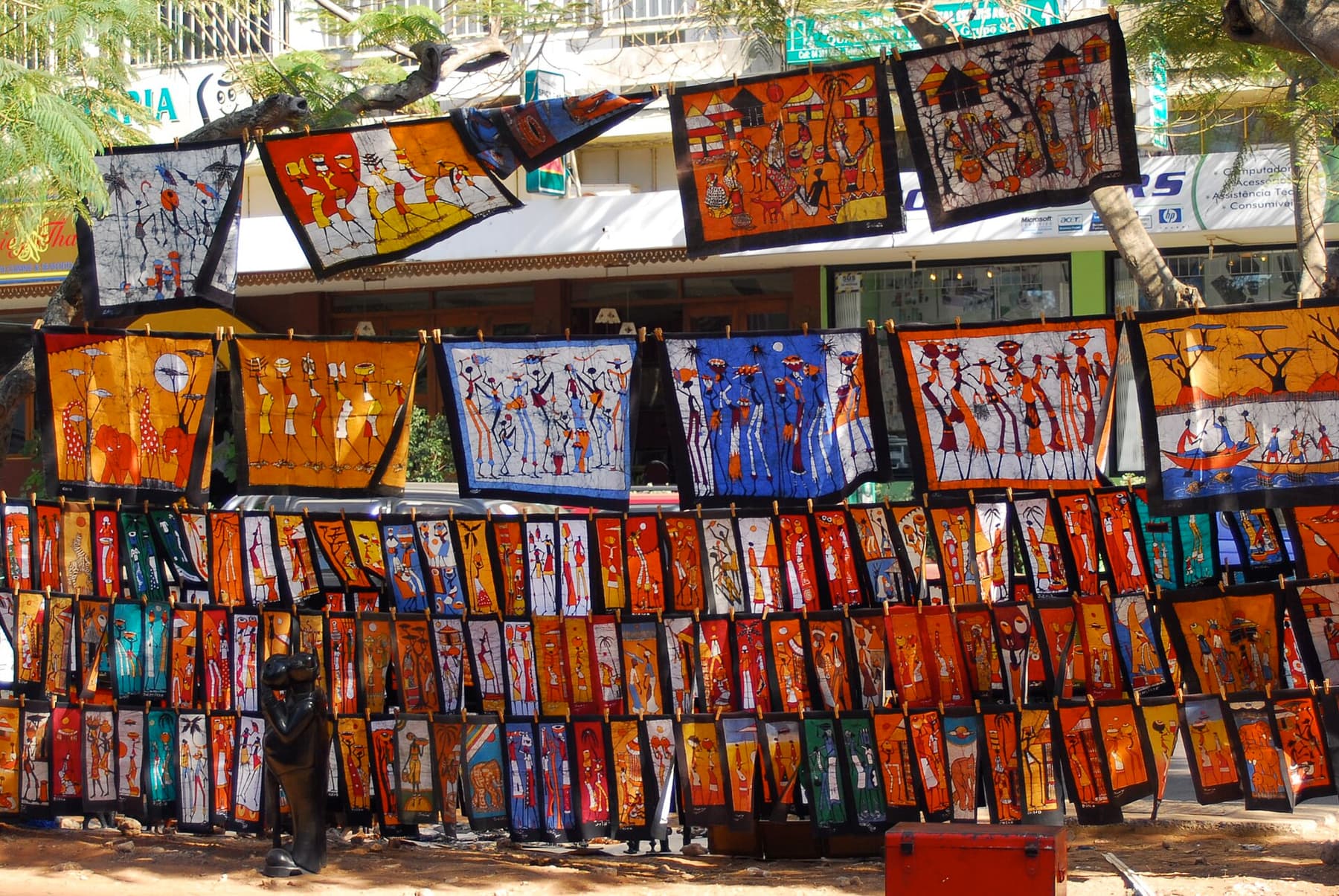
Capulana: the cloth that carries a country
Clothing, baby carrier, wedding gift, political statement — the printed cloth you will see everywhere in Mozambique.
Guides
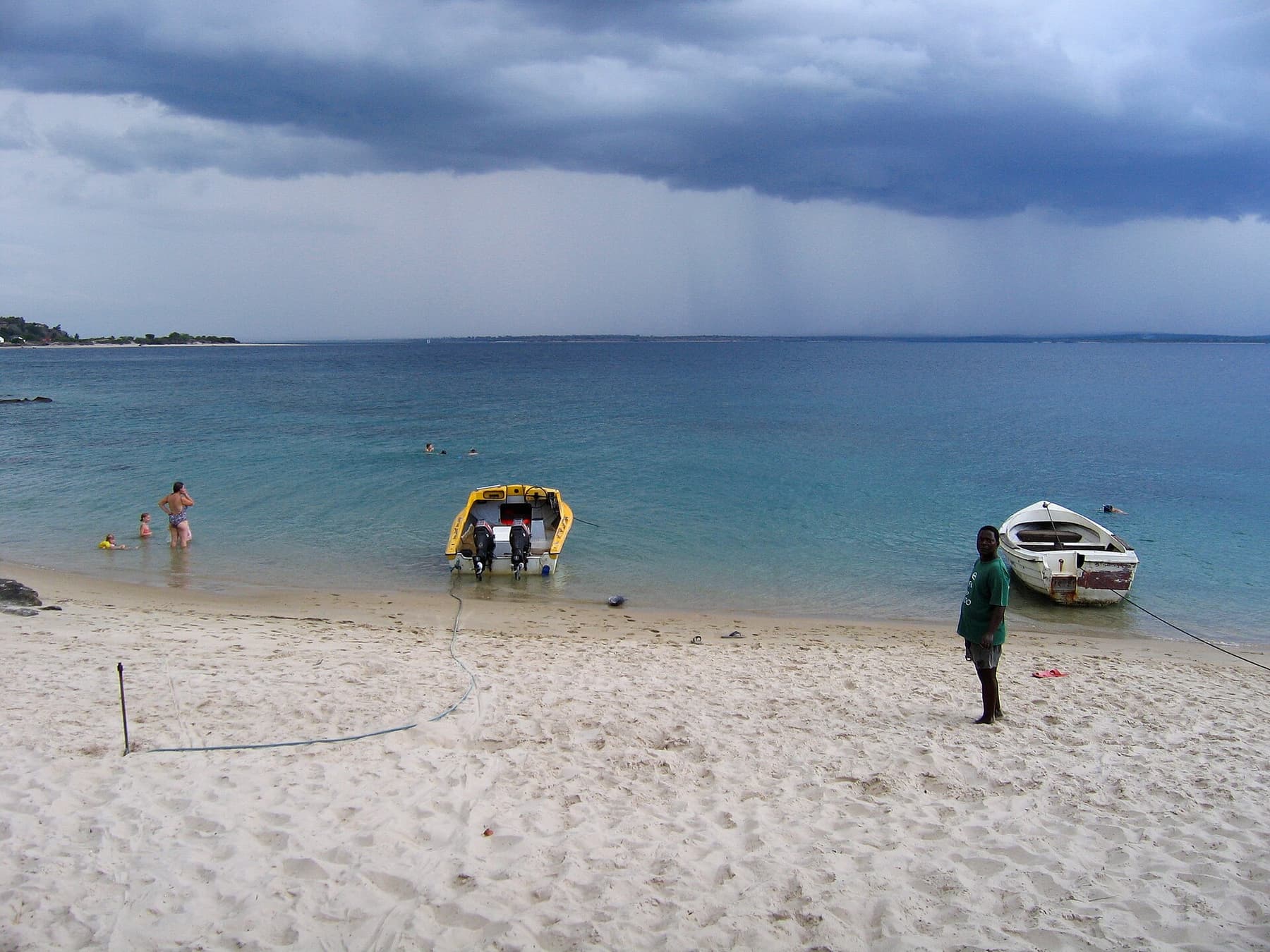
Diving Mozambique: mantas, whale sharks and where to find them
From Ponta do Ouro's sharks to the Quirimbas' walls — a region-by-region look at diving on the Mozambique Channel.
Destinations
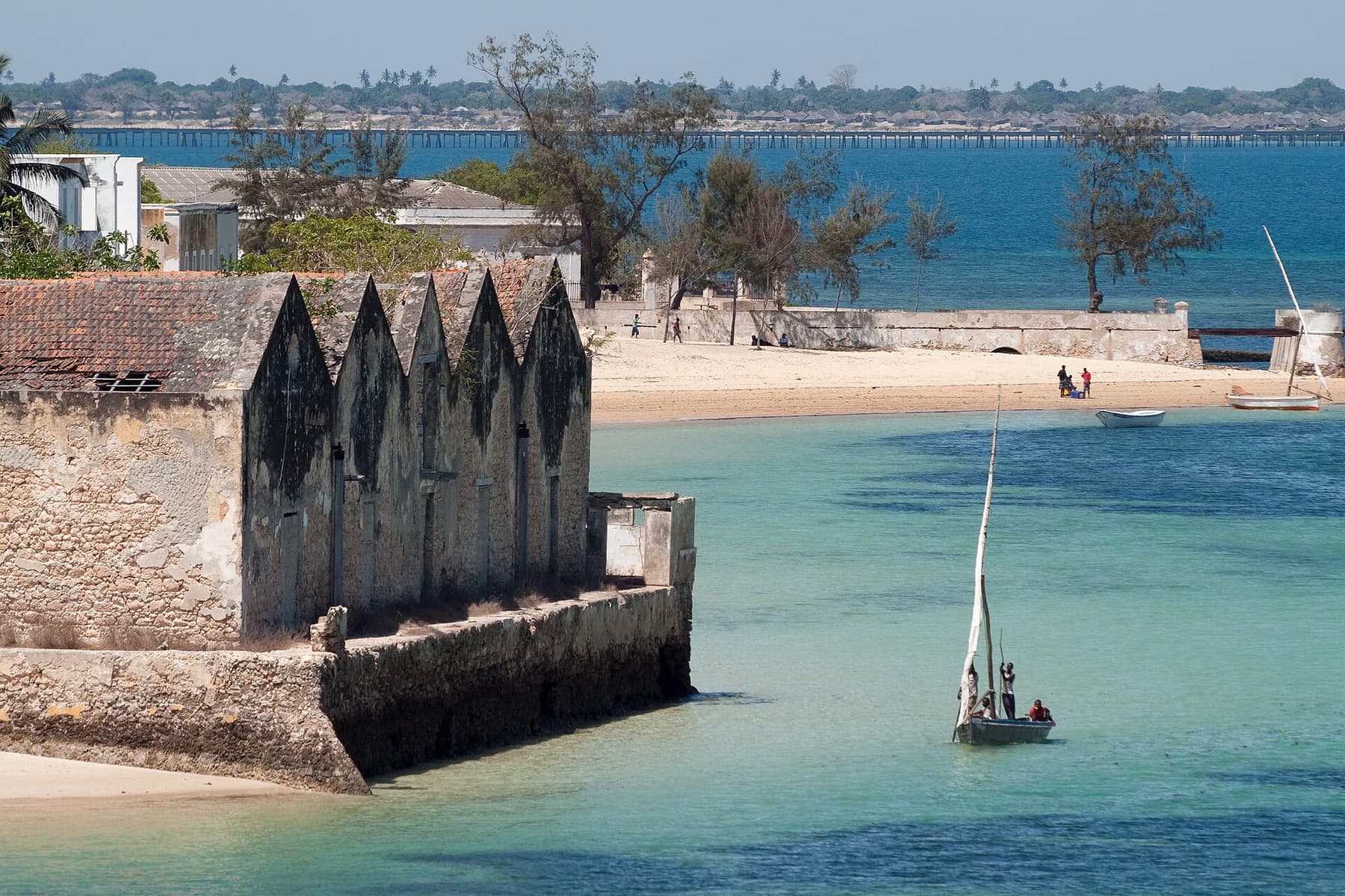
Ilha de Moçambique: a walking guide to the stone town
Three kilometres of island that held the capital of Portuguese East Africa for four centuries — and gave the country its name.