Destinations · 2 June 2026
Ilha de Moçambique: a walking guide to the stone town
Three kilometres of island that held the capital of Portuguese East Africa for four centuries — and gave the country its name.
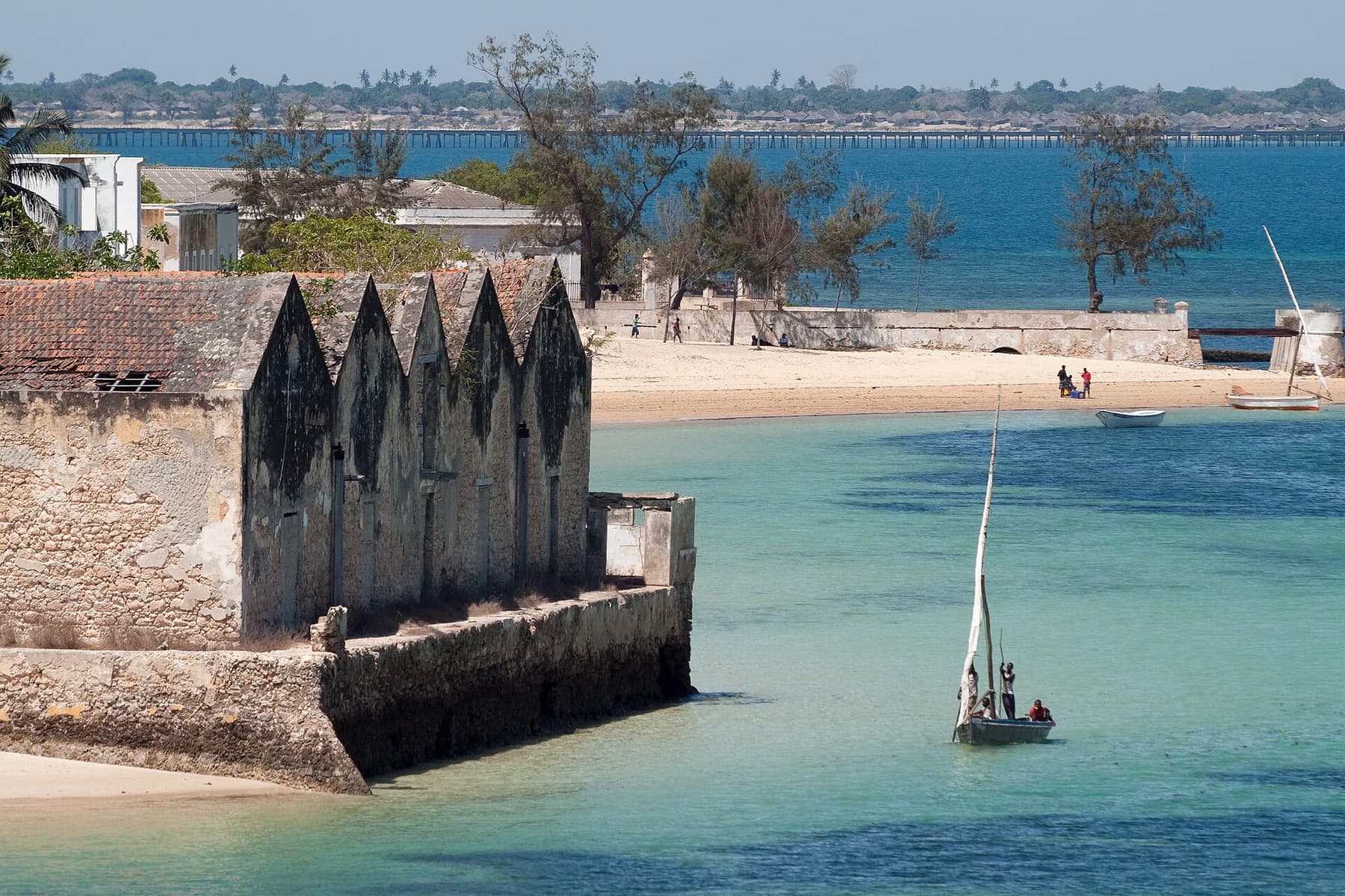
Ilha de Moçambique is small enough to walk end to end in under an hour, and dense enough to keep you occupied for days. It has been a UNESCO World Heritage Site since 1991.
Start at the fort
The Fortress of São Sebastião occupies the northern tip of the island — a vast sixteenth-century structure whose walls enclose an area larger than most of the town. Inside it stands the Chapel of Nossa Senhora do Baluarte, completed in 1522 and generally regarded as the oldest surviving European building in the southern hemisphere. Go early, before the heat.
Through Stone Town
Walk south into the streets of coral-stone houses, lime-washed in ochre, white and pale blue. Some are immaculately restored; many are open to the sky with baobabs growing through the courtyards. The Palace and Chapel of São Paulo, the former governor's residence, is now a museum with much of its original furniture — a genuinely strange and evocative interior.
The waterfront on the eastern side is where dhows come and go. It is the best place to be an hour before sunset.
Makuti Town
The southern half of the island is where most islanders actually live, in palm-thatched houses arranged along sandy lanes. It is a living neighbourhood, not a sight — walk through it with respect, ask before photographing anyone, and consider going with a local guide, which is better for everyone.
Practical notes
- Water is genuinely scarce on the island. Use it carefully.
- Bring cash; card facilities are limited.
- The bridge from Lumbo is 3 km long and single-lane, with traffic alternating direction.
- Guides are available at the fort and are worth taking — the history here does not explain itself.
Stories and guides
Culture
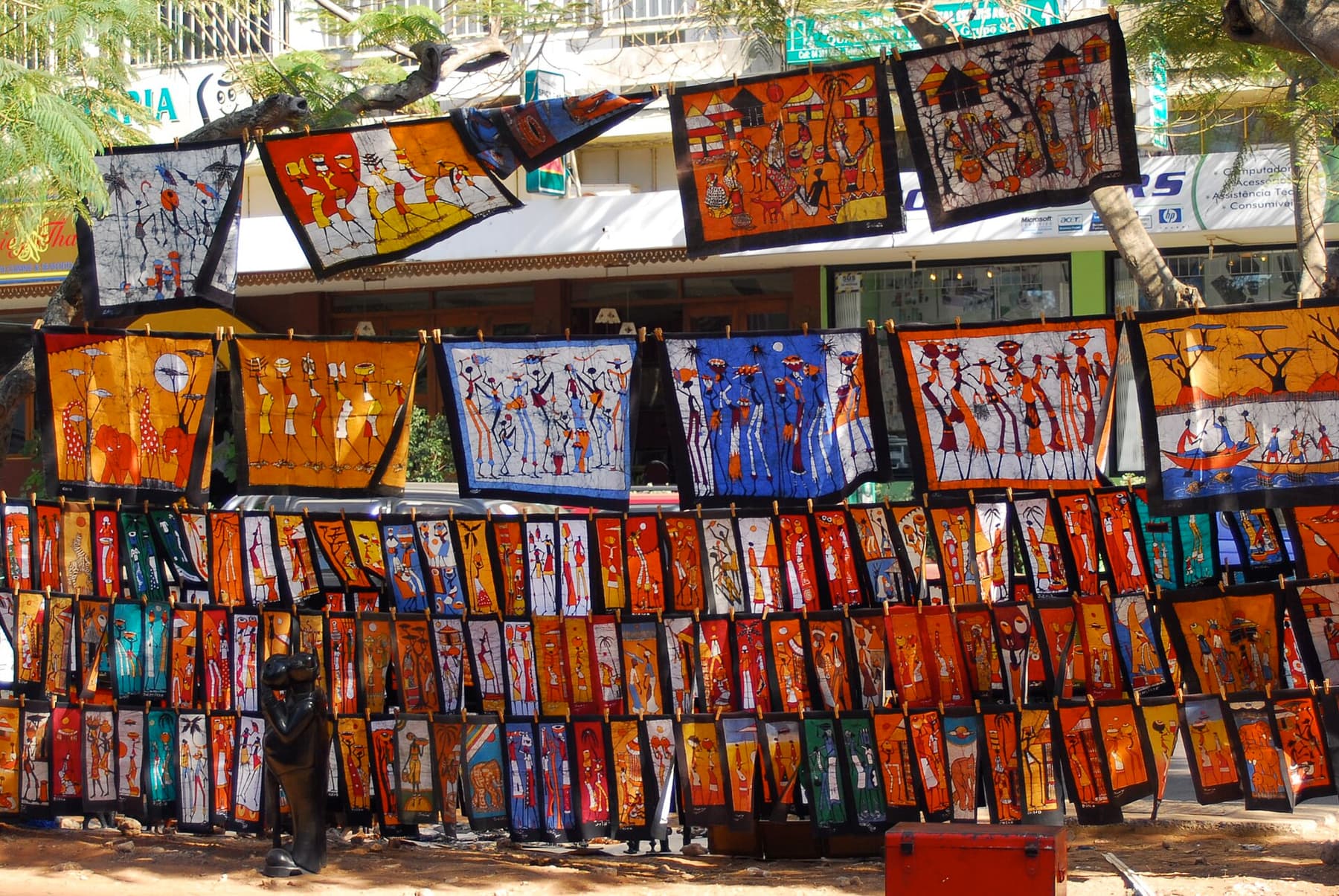
Capulana: the cloth that carries a country
Clothing, baby carrier, wedding gift, political statement — the printed cloth you will see everywhere in Mozambique.
Guides
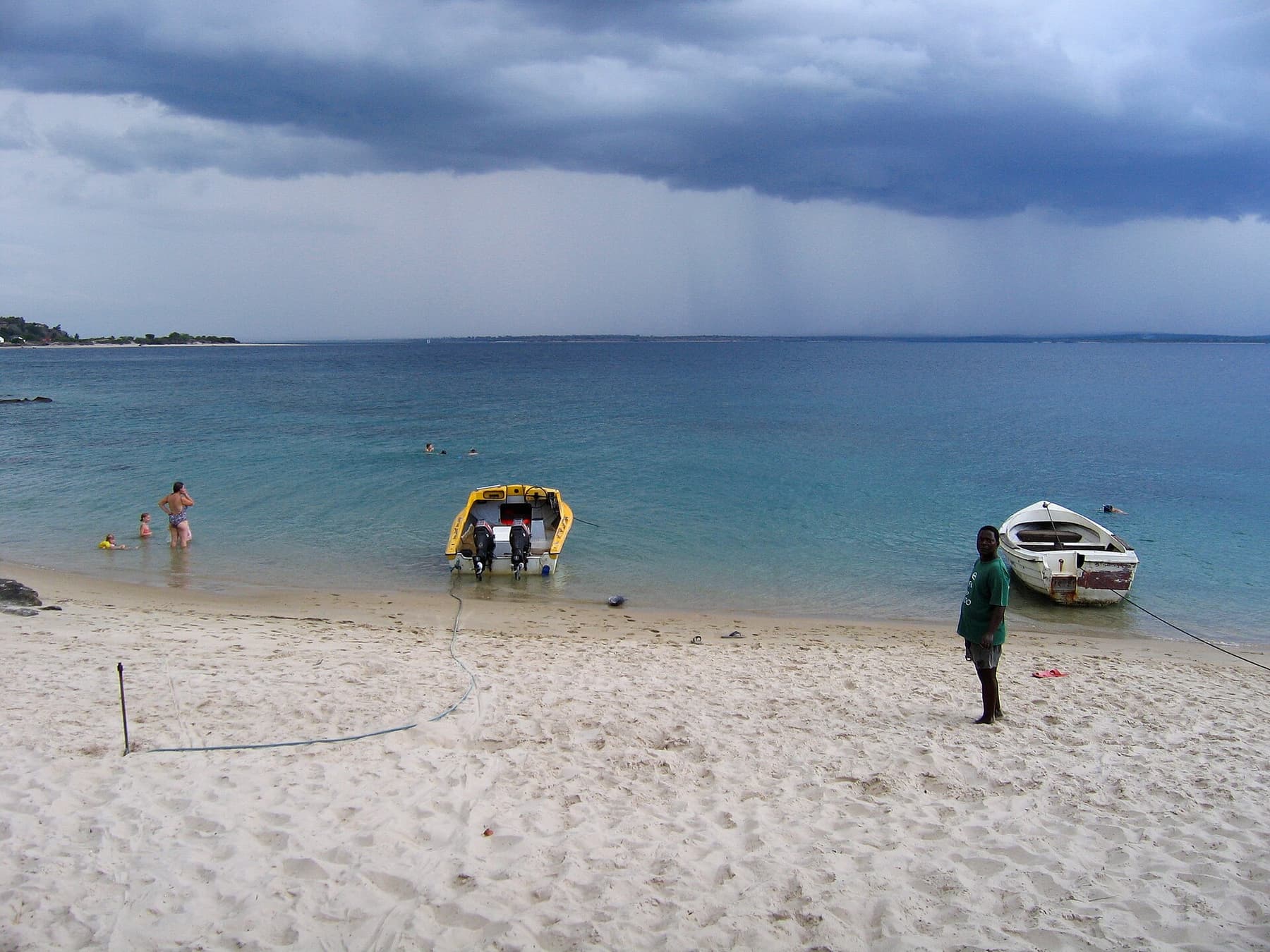
Diving Mozambique: mantas, whale sharks and where to find them
From Ponta do Ouro's sharks to the Quirimbas' walls — a region-by-region look at diving on the Mozambique Channel.
Nature
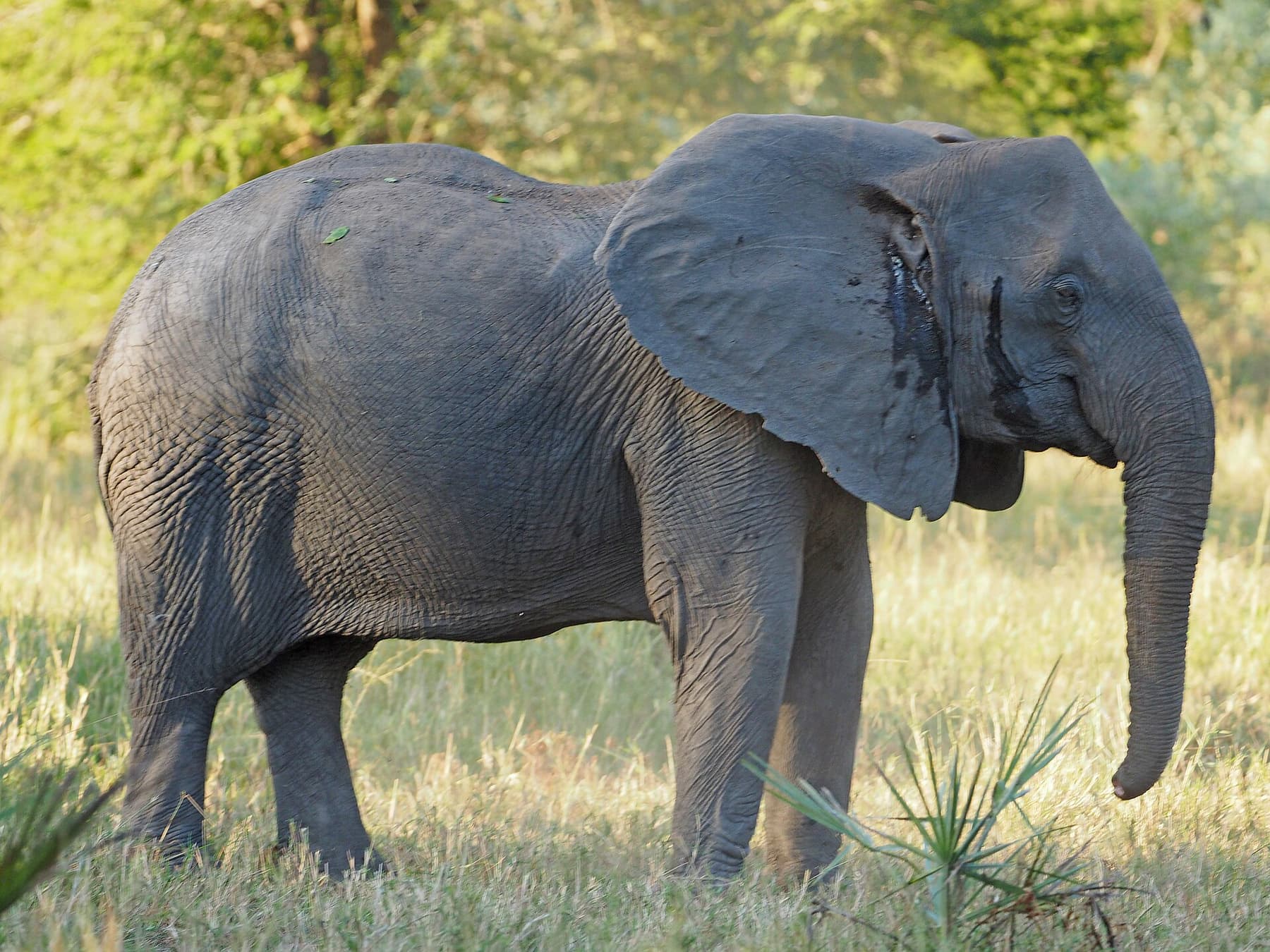
Gorongosa: how a lost park came back
Two decades of restoration have turned Gorongosa into one of the most closely watched conservation projects in Africa.